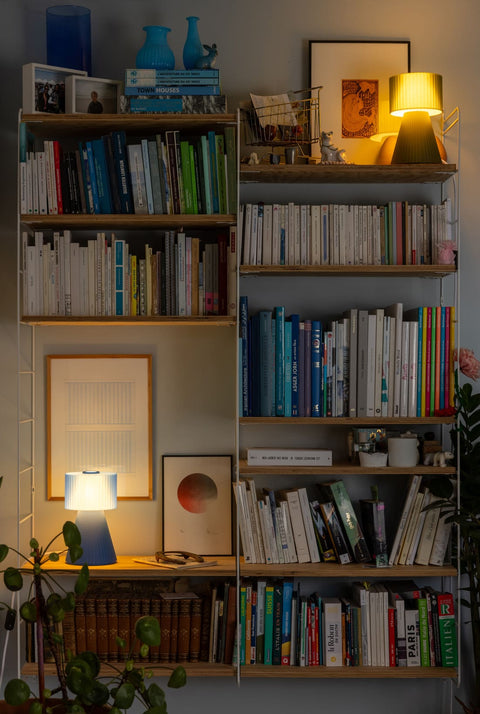
What Our Lamps Are Made Of (And Why It Matters)
Every object in your home has a story that begins before it arrives. Before the switch, before the light, before the form, there is the material. And at Lustra, the question of what a lamp is made from is one we take seriously, because it shapes everything that follows: how it is made, how it ages, how it interacts with light, how long it lasts, and what happens to it when its life in your home is eventually done.
There is a tradition in design and craft sometimes called material honesty: the idea that the right approach to making something is to let the material be what it is, rather than coating it, disguising it, or making it pretend to be something else. Wood should look like wood. Concrete should look like concrete. The material's nature is part of the object's character, and concealing it is a small lie told to the person who lives with it.
The Texture Question
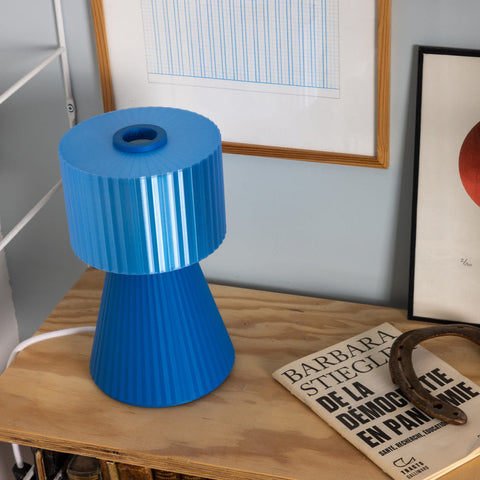
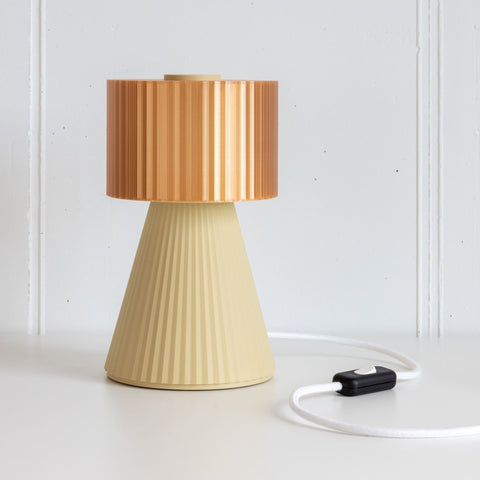
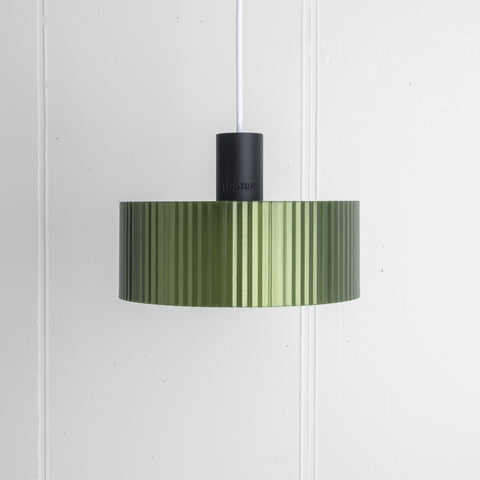
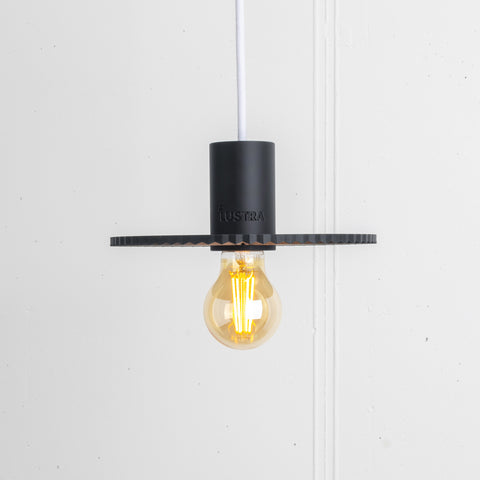
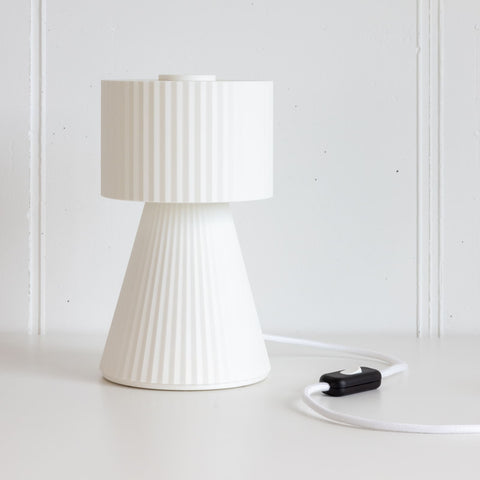
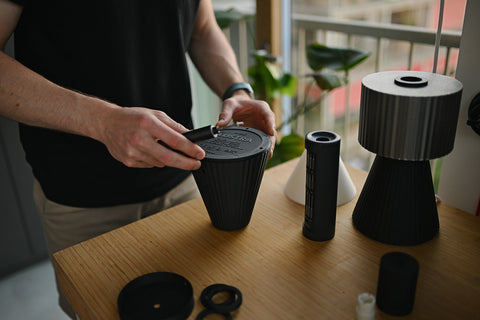
Our lamps are made using 3D printing and if you look closely at a Lustra lamp, you will see the traces of that process. Fine horizontal lines. The layered archaeology of how the object was built up from nothing, pass by pass, from the first thread of material to the last. The lamp carries the record of its own making.
We have thought carefully about this texture. We could pursue a smoother, more processed finish: sanding, priming, coating until the layers disappear beneath a uniform surface. Some manufacturers do this, and the results can be convincing. But we have chosen, largely, not to. Here is why.
The layered surface of a printed object is honest. It tells you exactly what the thing is and how it came to exist. There is a kind of integrity in that visibility: an aesthetic vocabulary that belongs specifically to this way of making, rather than imitating the surface language of injection moulding or casting. These marks are not defects; they are evidence of a process, the way grain is evidence in wood and tool marks are evidence in stone.
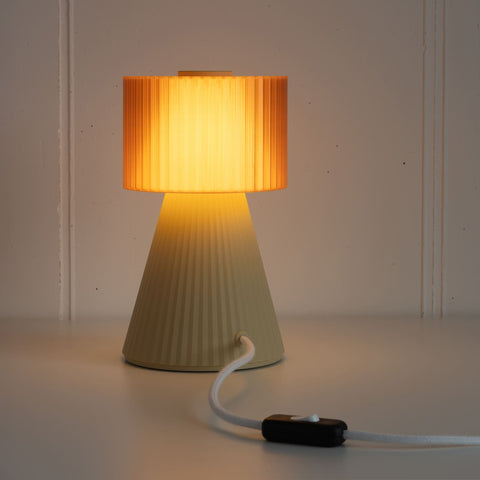
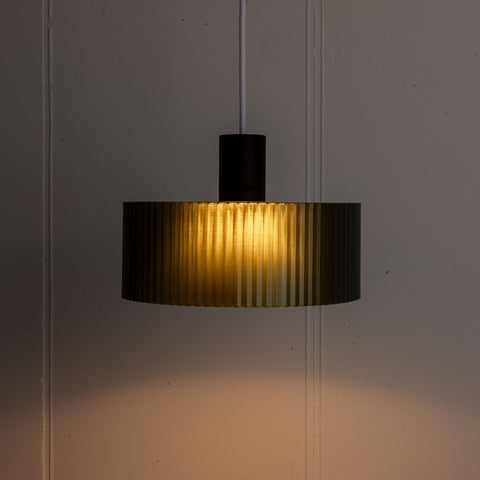
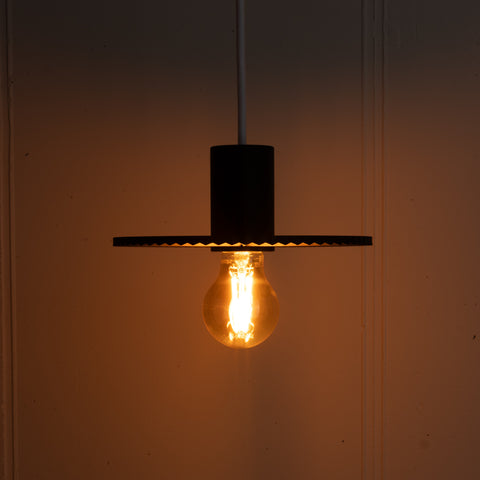
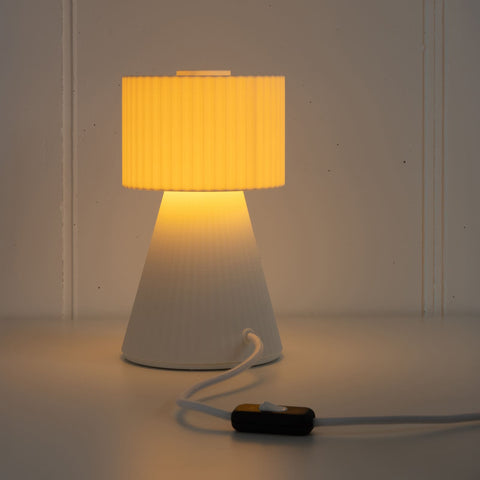
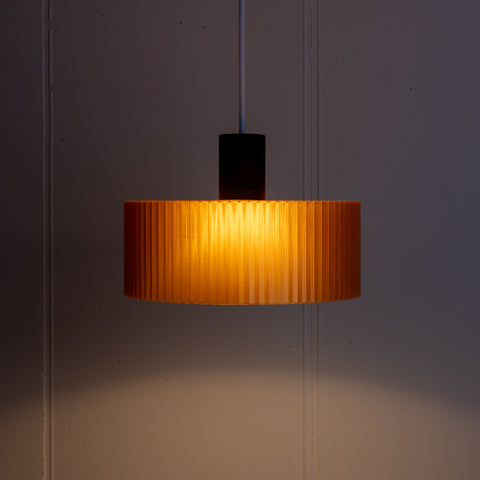
When light rakes across that texture at a low angle, or when the diffused glow of the lamp illuminates the layers from within, the surface reveals itself. Shadows gather in the valleys between layers; the ridges catch the light. At the right angle, the surface of a Lustra lamp looks almost architectural, a landscape at very small scale.
We are not interested in disguising how our lamps are made. The process is part of the object. If you look closely and see the layers, we hope you find them worth seeing.
Why Materials Matter More Than We Usually Admit
We live surrounded by objects whose material origins we rarely think about. A lamp gets bought because of how it looks in a photograph, or because it fits a budget, or because it arrived quickly. The fact that it is made from a dozen different materials sourced from as many countries, assembled somewhere, shipped somewhere else, and will eventually become difficult-to-sort waste; that doesn't make it into the description on the product page.
We understand why. It's complicated, and complication doesn't sell. But we think something is lost when we treat the material content of the things we bring into our homes as a footnote. Materials carry weight, not just physical weight, but consequence. They connect an object to the world it came from and to the world it will eventually return to.
Good design has always known this. The architects and makers who built things that have lasted decades or centuries didn't separate form from material; they understood them as the same question. What a thing is made of is part of what it is. A chair that looks like wood but is made of laminated particle board and a PVC veneer is not simply a different chair; it is a different relationship between object, owner, and time. It is an object that has already decided how long it intends to exist.
We want our lamps to make a different decision.

We make our lamps using two materials: PLA and PETG. These are not household names the way oak or marble are. But they deserve to be understood properly and honestly.
PLA: Grown, Not Drilled
PLA (polylactic acid) is a thermoplastic derived from plant starches, most commonly corn or sugarcane. This is worth pausing on, because it represents a genuinely different starting point from most plastics: rather than being extracted from petroleum, PLA begins its life as a crop in a field.
We want to be clear about what that means, and what it does not.
PLA is bio-sourced, which is a real and meaningful distinction. It requires less fossil energy to produce than conventional plastics, and it comes from a renewable feedstock that can, in principle, be grown again. For a material that shapes objects meant to carry light in a home, there is something fitting about a starting point that is itself alive.
But we will not dress this up into something it is not. The agricultural processes behind PLA have their own environmental footprint: land use, water, the inputs that go into any crop at scale. And PLA does not biodegrade in ordinary conditions. It requires industrial composting infrastructure, with specific temperatures and controlled environments, to break down properly. Left in a landfill, it behaves much like conventional plastic. The term "biodegradable" is sometimes applied to it loosely, and we think that is misleading.
What we value in PLA is honest: its combination of dimensional precision, surface quality, and a material origin that sits closer to the natural world than petroleum-based alternatives. It is a considered choice, not a perfect one. We are not aware of perfect choices in materials, only more and less thoughtful ones.
PETG: Where Structure Meets Light
PETG is a variant of the same polymer family as PET, the material used in most plastic bottles and a large share of food packaging worldwide. It is a well-understood, widely used material with a long track record, and we chose it for several reasons: it is strong, dimensionally stable, and resistant to the gradual degradation that can compromise the long-term integrity of a product. But there is another quality that matters enormously in a lamp, and that is how it handles light.
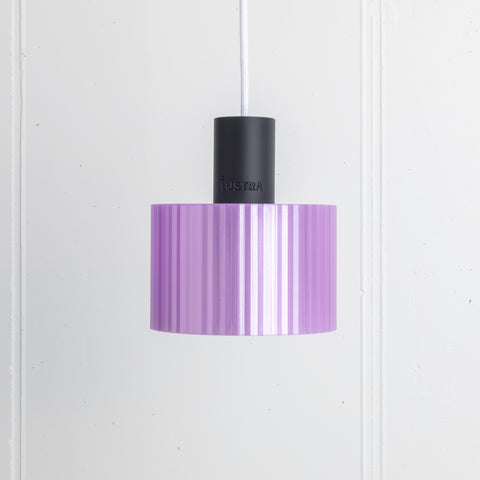
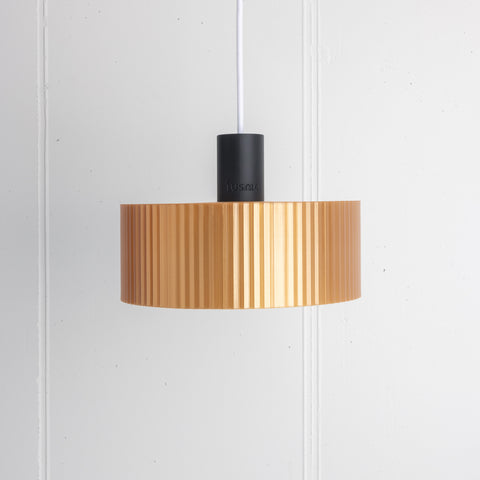
We use PETG in a translucent form for the components where light passes through. The effect is not incidental. Translucent PETG does not simply let light through; it works it. Light enters the material, scatters within it, and emerges softened and diffused. The raw, directed output of a bulb becomes something quieter and more even by the time it reaches the room. The material is participating in the lighting, not just containing it. When you notice that a Lustra lamp produces light that feels gentle and somehow better than you expected, what you are experiencing is partly this: a material doing its job well, in collaboration with the light source rather than in spite of it.

PETG is recyclable. But this is the point where we need to be careful and precise, because recyclability in theory and recycling in practice are two different things.
The recycling symbol on a material tells you what it could be. It says nothing about whether your local waste infrastructure will actually process it. Recycling capabilities vary enormously: by country, by city, sometimes by district. Some facilities accept PETG without issue; others lack the equipment to handle it at all. The technology is improving, and the picture is better in parts of Europe than in many other regions of the world, but we won't make promises we can't keep about what happens to a specific object in a specific place.
What we can tell you is that it is worth finding out. Municipal websites, recycling guides, or a direct question to your local waste service will give you a clearer picture than any symbol on the product. The effort is small. The difference between a material reaching the right stream versus the wrong one is not small at all.
Where Materials Come From
When we source materials, quality comes first. A material that underperforms cannot be justified by the story of where it was grown or who made it. That trade-off leads to worse objects and, often, to worse environmental outcomes too, because an object that fails or degrades quickly ends up being replaced. Durability and responsible sourcing are not in tension; they are part of the same set of values.
Beyond performance, we try to make conscious decisions about where things come from. Proximity matters: it tends to mean shorter supply chains, more legible relationships, and less transport. Where we have a genuine choice between suppliers of equivalent quality, we factor that in.
Built to Last
We designed our lamps to last. Not for a season or two until something shinier replaces them. For years, ideally for a very long time. A Lustra lamp is meant to become part of a space the way that good objects do: quietly, steadily, until it is hard to imagine the room without it.
We say this not as marketing but as a design position. An object designed to last is an object designed with a different kind of respect: for the person who owns it, for the material it is made from, for the energy and thought that went into making it. Longevity is the most straightforward form of sustainability available to a physical product: fewer replacements, less waste, less of everything.

But we are realistic. The day may eventually come when a lamp has reached the end of its life in your home and recycling through local channels is not available or practical. We do not want it to end up in landfill. So here is our commitment: send it back to us.
We will disassemble it, separate the materials properly, and ensure they re-enter a production or recycling cycle, becoming something else, somewhere else. The material continues. This is not a formal programme with complicated conditions or fees. It is simply what we believe should happen to the things we make, and we stand behind it.
Looking Forward
PLA and PETG are the materials we work with today. We understand them well, work with them carefully, and can speak about them with accuracy. We are satisfied that they are the right choices for what we are making now, in this place, with the knowledge we currently have.
Whether any different materials find their way into Lustra lamps, and when, and in what form, will depend on the same questions we ask of everything: Does it perform? Can we source it responsibly? Can we stand fully behind its story? What happens to it at the end?
For now: this is what our lamps are made of, and this is how we think about it. We hope it tells you something useful, not just about the materials, but about the way we work.